
Georgia is the nation's largest supplier of pecans, accounting for about a third of U.S. pecan production. An average pecan harvest in Georgia is about 88 million pounds - enough to make 176 million pecan pies. UGA Extension provides both commercial and home pecan growers a variety of information to help have the best output with the least amount of labor possible.
Our Programs and Services
-
Lab Testing and Analysis Services Testing for soil, plant tissue, water quality, animal waste, feeds and forages, pesticides, and much more!
-
On-Site and Telephone Consultation Available in many county offices for ag producers.
-
Pesticide Safety Education Program Topics include pest identification, storage and disposal, pesticide drift and runoff prevention, water quality protection, and food safety.
-
Production Meetings Updates on local issues for growers and producers.
Recent Publications
-
Insect Pests of Non-bearing Pecan Trees (C 1228) As Georgia's pecan production acreage has increased, reports of insect pests that attack younger, less established trees have also increased, particularly infestations by pecan bud moth and ambrosia b…
-
Commercial Pecan Spray Guide (B 841) This publication provides guidance for insect, disease, and weed control in commercial pecan orchards for 2024.
-
2024 Georgia Ag Forecast Series: 2024 Fruits and Tree Nuts Outlook (AP 130-2-10) 1. High prices for peach producers helped a strong producer price index in the 2022–2023 crop season. The PPI is expected to stay strong in 2024. 2. Favorable prices came from production shortages, ca…
-
Beneficial Insects of Pecan Trees (C 1229) Accurately distinguishing insect pests from beneficial arthropods is a critical component in the implementation of an effective and sustainable pest management program. This circular provides a succin…
Websites
UGA-affiliated sites
UGA Pecan Team Blog The UGA Pecan Extension Blog is designed to provide timely information relevant to pecan production in Georgia for use by county extension agents and pecan producers.
Pecans at UGA Summarizes the history and recent production output of Georgia's pecan growers. Includes extensive resources on pecan growth and pest management, newsletters from and contact information for the Pecan Team and external links.
Pecan Breeding at UGA Lists pecan cultivars, recommends cultivars for different environments and shares links to related papers and external websites.
Impact Statements: Pecans Descriptions of Extension efforts to improve knowledge and practices related to pecans.
TimBrenneman.org Pecan Truffles A significant aside to Dr. Tim Brenneman’s pecan program is work on pecan truffles, which he discovered in Georgia in the late 1980s. Brenneman is collaborating with others to better understand the biology of these fascinating fungi.
UGA Department of Horticulture Learn more about the horticulture department at the UGA College of Agricultural and Environmental Sciences.
UGA Department of Plant Pathology Learn more about the plant pathology department at the UGA College of Agricultural and Environmental Sciences.
Commodity Teams at CAES Teams made up of research scientists and extension specialists work together to provide the latest technology and information for efficient, profitable production of some of Georgia's most valuable commodities.
External sites
Georgia Pecan Commission Targets consumers with extensive recipe lists, health facts, and information on purchasing and storing.
Georgia Pecan Growers Association Connects visitors to state pecan growers' associations and pecan suppliers and hosts conferences. Provides detailed nutritional information on pecans.
National Pecan Shellers Association Targets consumers with recipe lists, extensive health information and purchasing information.
-
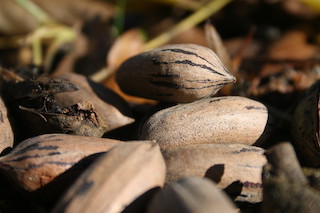
Climate Adapted Pecans An international team of researchers, including four faculty from CAES, has received a USDA NIFA award for the second phase of a study on one of Georgia’s top commodities: the pecan.
-
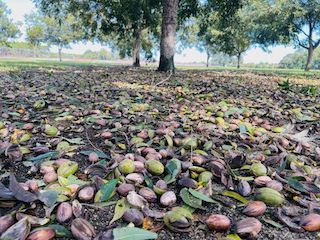
Growing Pecan Markets Georgia pecan growers are celebrating a huge win as India reduced tariffs on imported pecans by 70% last week following a decades-long effort to open that market for the popular tree nut.
-
Pecan Quality The findings could also help producers improve quality, increase shelf life.
| Top Pecan Producers | |
|---|---|
| County Name | Value |
| Mitchell | $48,685,000 |
| Dougherty | 40,950,000 |
| Peach | 23,100,000 |
| Lee | 17,671,014 |
| Macon | 14,764,500 |
| Houston | 12,896,880 |
| Dooly | 12,600,000 |
| Lowndes | 10,880,000 |
| Pulaski | 10,400,000 |
| Calhoun | 10,321,920 |
| State Total: | $400,790,725 |
|
Displaying farm gate values for 2022. Values are tallied in October for the previous year. |
|